资源简介
 Encyclopedia

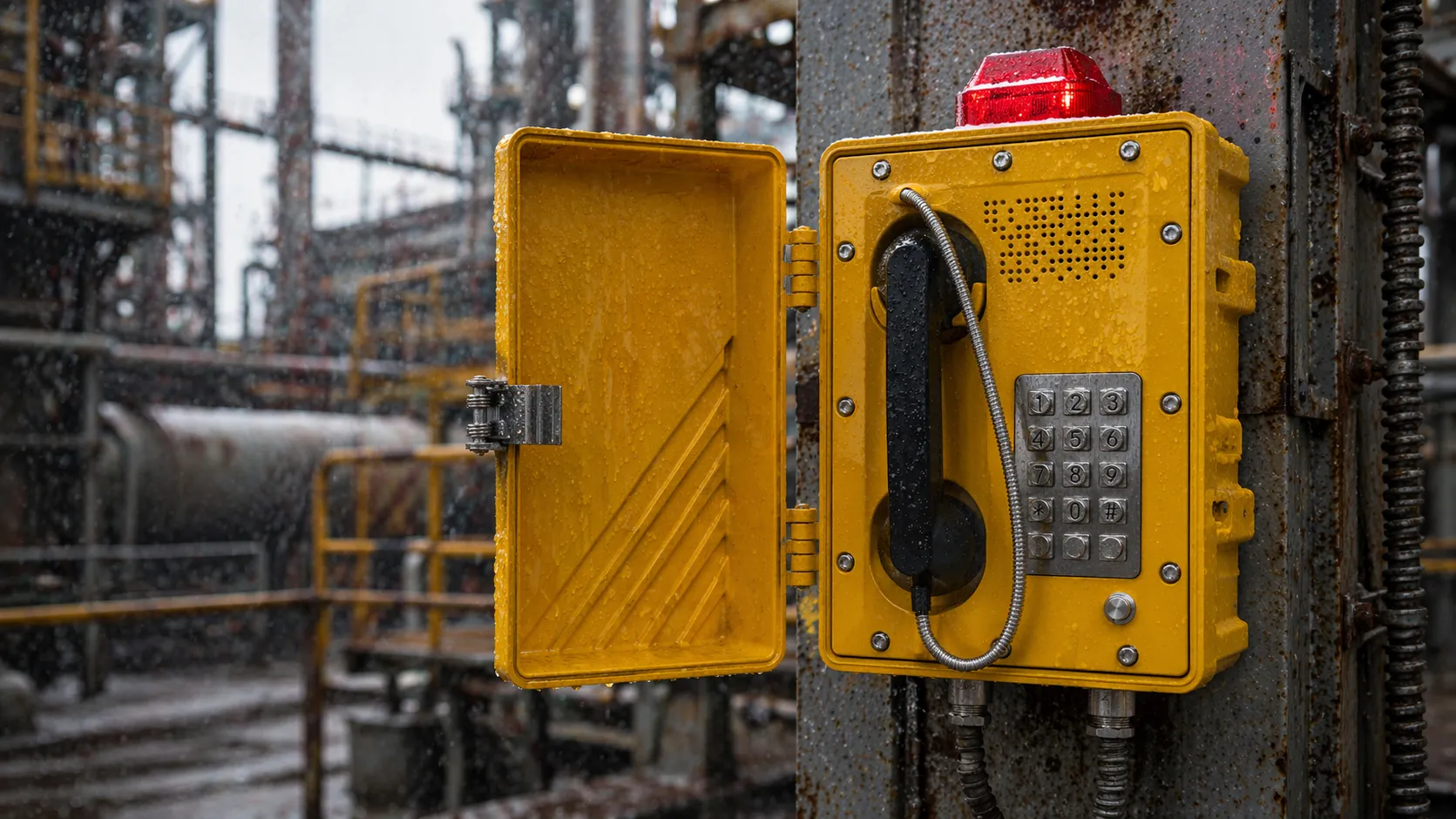
An industrial telephone is a rugged communication device designed to provide dependable voice communication in places where standard office phones are likely to fail. These environments can include factories, tunnels, mines, rail systems, ports, power plants, warehouses, chemical sites, and other areas exposed to dust, moisture, vibration, temperature swings, heavy handling, and continuous operation requirements.
Unlike consumer or office telephones, an industrial telephone is built around durability, audibility, and operational reliability. It typically uses a reinforced housing, sealed electronics, high-visibility controls, loud ringing, and components engineered to keep working in noisy, dirty, or outdoor conditions. Depending on the deployment, it may connect through analog lines, SIP/VoIP networks, cellular gateways, or dedicated industrial communication platforms.
An industrial telephone is not simply a “tougher desk phone.” It is a purpose-built voice endpoint designed for harsh sites where communication supports safety, continuity, and fast incident response.
An industrial telephone is a fixed or mounted telephone designed for use in challenging operating conditions. Its main role is to give workers, operators, maintenance teams, visitors, or emergency responders a reliable way to place and receive calls when conditions are too demanding for ordinary telephony equipment. In many projects, the device becomes part of a larger safety or operations workflow rather than just a simple calling tool.
For example, an industrial telephone may be installed along a conveyor line, at a tunnel cross passage, beside a process unit, near a loading bay, inside a control room, or at a perimeter gate. In each case, the phone serves a different operational purpose. It can be used for routine coordination, maintenance support, dispatch communication, remote assistance, reporting faults, or emergency help requests.
Because these telephones are often deployed where downtime carries real operational risk, designers focus on reliability first. The device is expected to remain available during bad weather, loud machinery operation, washdown cleaning, or exposure to dirt and corrosion. In more demanding sectors, specialized versions may also be designed for hazardous areas where explosive atmospheres are a concern.
A conventional office phone is normally intended for clean, temperature-controlled, indoor environments. It is not built to withstand hose-down water, airborne dust, corrosive atmospheres, shock, vandalism, or the repeated physical stress found on industrial sites. Even when a consumer device technically powers on, it may still be unusable because the speaker is too weak, the keypad is too delicate, or the enclosure cannot protect the electronics over time.
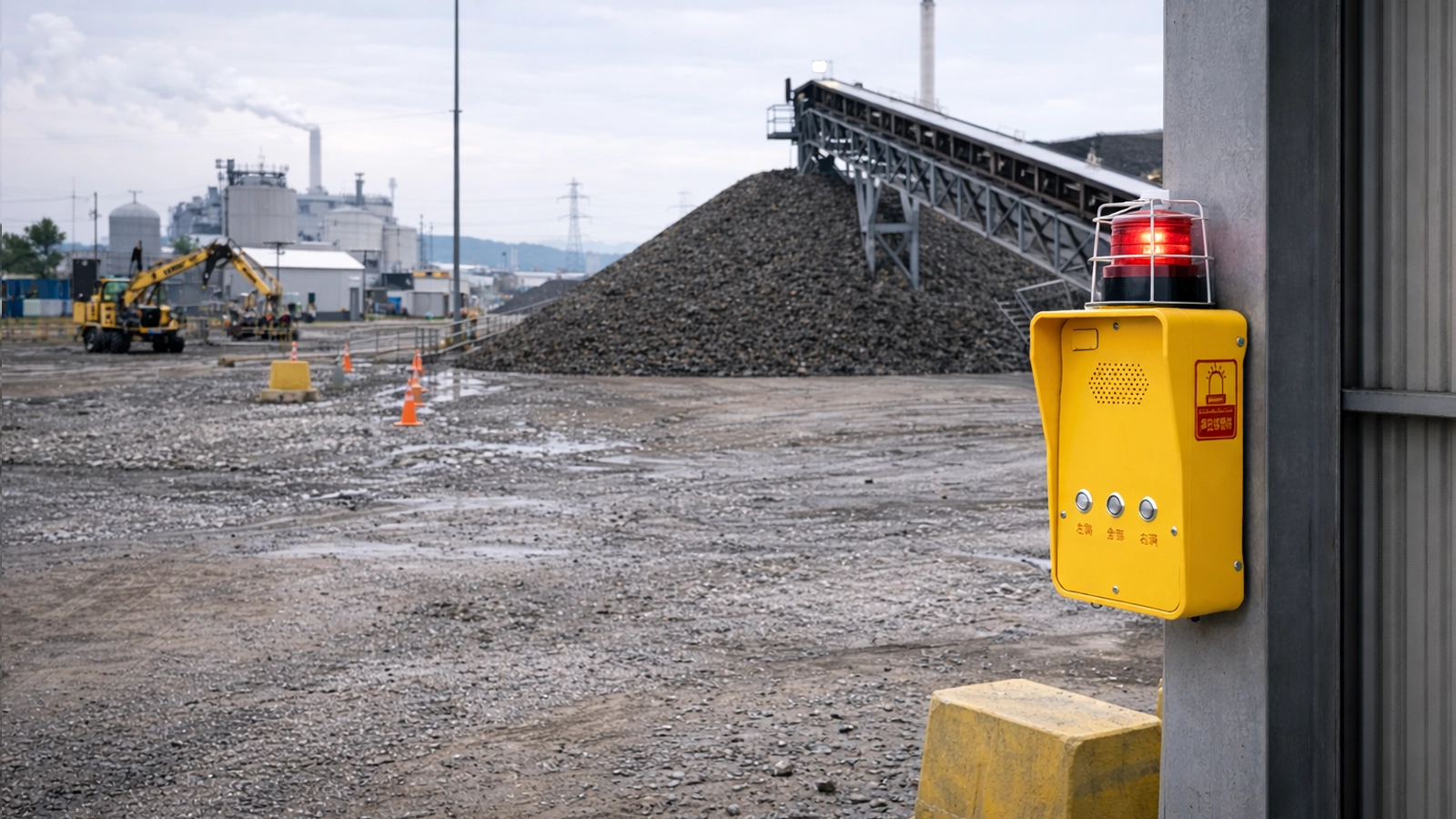
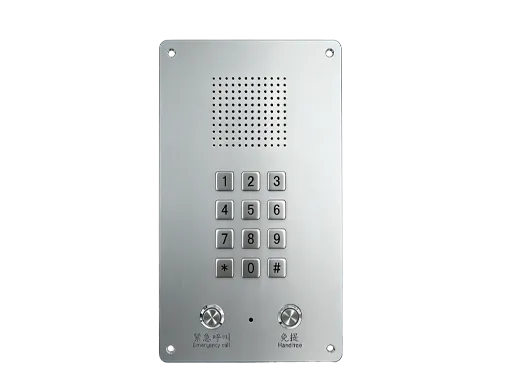
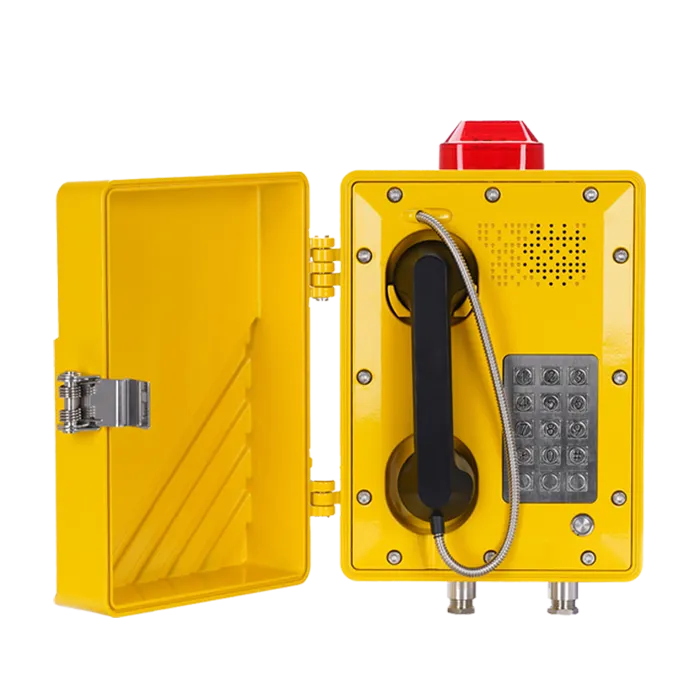
Industrial sites also create communication challenges that ordinary phones do not address well. Background noise may be extremely high. Users may be wearing gloves. Visual attention may be limited. Calls may need to reach a control room, a dispatch platform, or a help point instantly. This is why industrial telephones often use larger buttons, auto-dial functions, noise-reducing audio design, and highly visible housings such as yellow, orange, or stainless-steel enclosures.
At the most practical level, an industrial telephone works in the same broad way as any other telephone: it captures the user’s voice through a microphone, converts that speech into an electrical or digital signal, sends the signal through a communication network, and reproduces the incoming audio through a receiver or speaker at the other end. What changes is the way the device is engineered so that this process remains dependable in difficult conditions.
When a user lifts the handset, presses a help button, or activates a call key, the device initiates a call based on its configured network method. In an analog deployment, it uses traditional telephony signaling over a wired line. In a SIP/VoIP deployment, it registers to an IP PBX or communication server and uses network signaling to establish the call. In some remote or hybrid deployments, the telephone may also work with cellular or radio-linked infrastructure.
Once the call is established, the telephone handles two-way audio just like other voice endpoints. However, industrial models are often optimized for louder ringers, stronger acoustic output, echo management, and better intelligibility in noisy environments. Some models also support hands-free operation, external speakers, flashing beacons, door sensors, relays, or integration with alarms and public address systems.
The internal design of an industrial telephone is focused on maintaining stable operation over long periods. A typical unit includes a rugged housing, a handset or hands-free audio module, a keypad or one-touch calling button, a microphone and speaker assembly, an internal electronic control board, connection ports or cable entry glands, and sealing materials that help protect the electronics from dust and water.
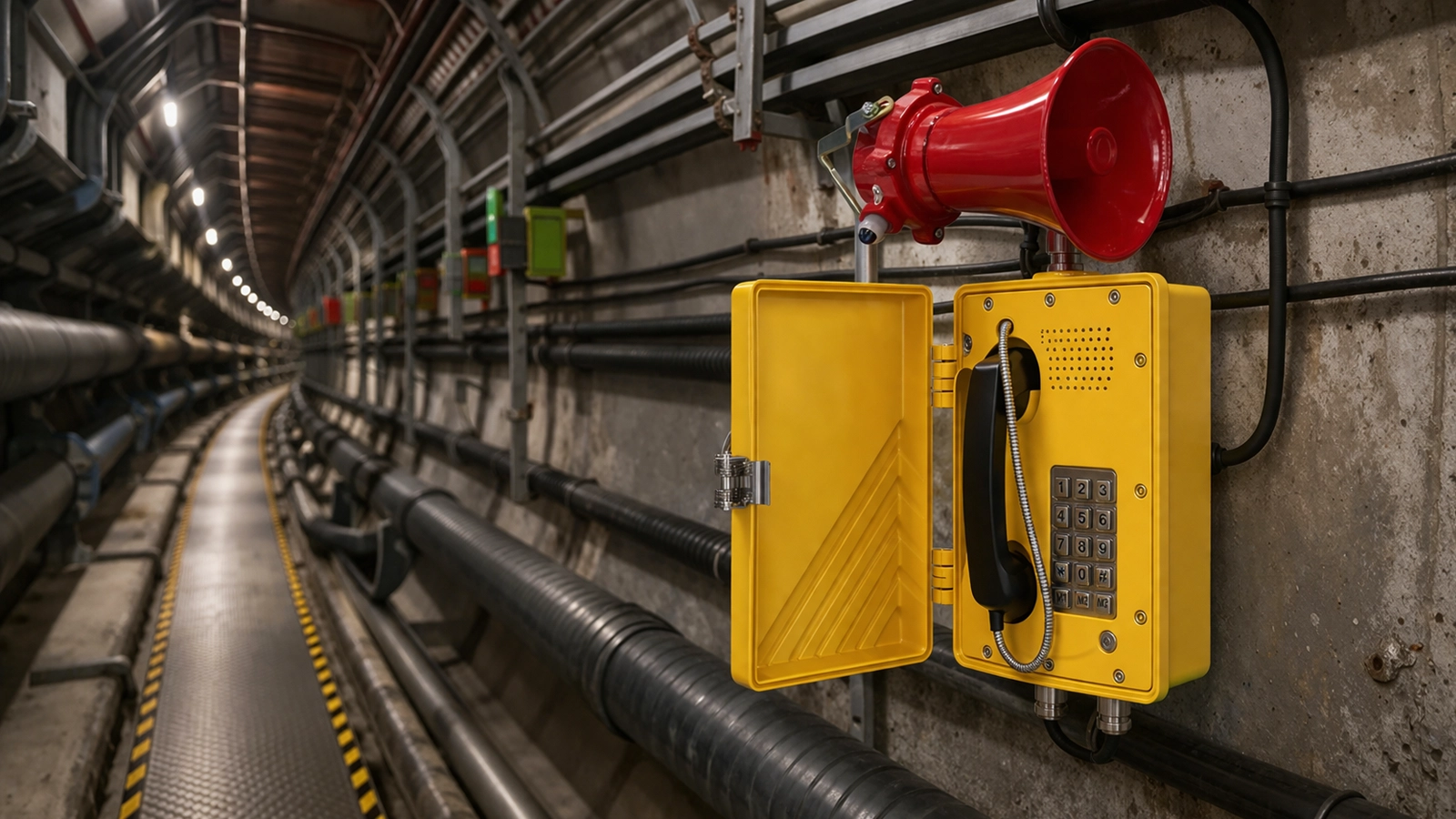
Many models also include features that support field use, such as metal keypads, armored handset cords, anti-corrosion coatings, magnetic hookswitches, tamper-resistant fasteners, and impact-resistant materials. In outdoor or exposed areas, a protective door or hood may be added to reduce water ingress and improve visibility. In high-noise areas, the acoustic design becomes especially important because call clarity matters as much as physical durability.
Power and communication can be delivered in different ways. Analog units may use conventional line power. IP-based industrial telephones commonly use Ethernet and may support PoE for simpler installation. Some devices are paired with external amplifiers, strobe lights, or relay outputs so that a call event can trigger a wider site response.
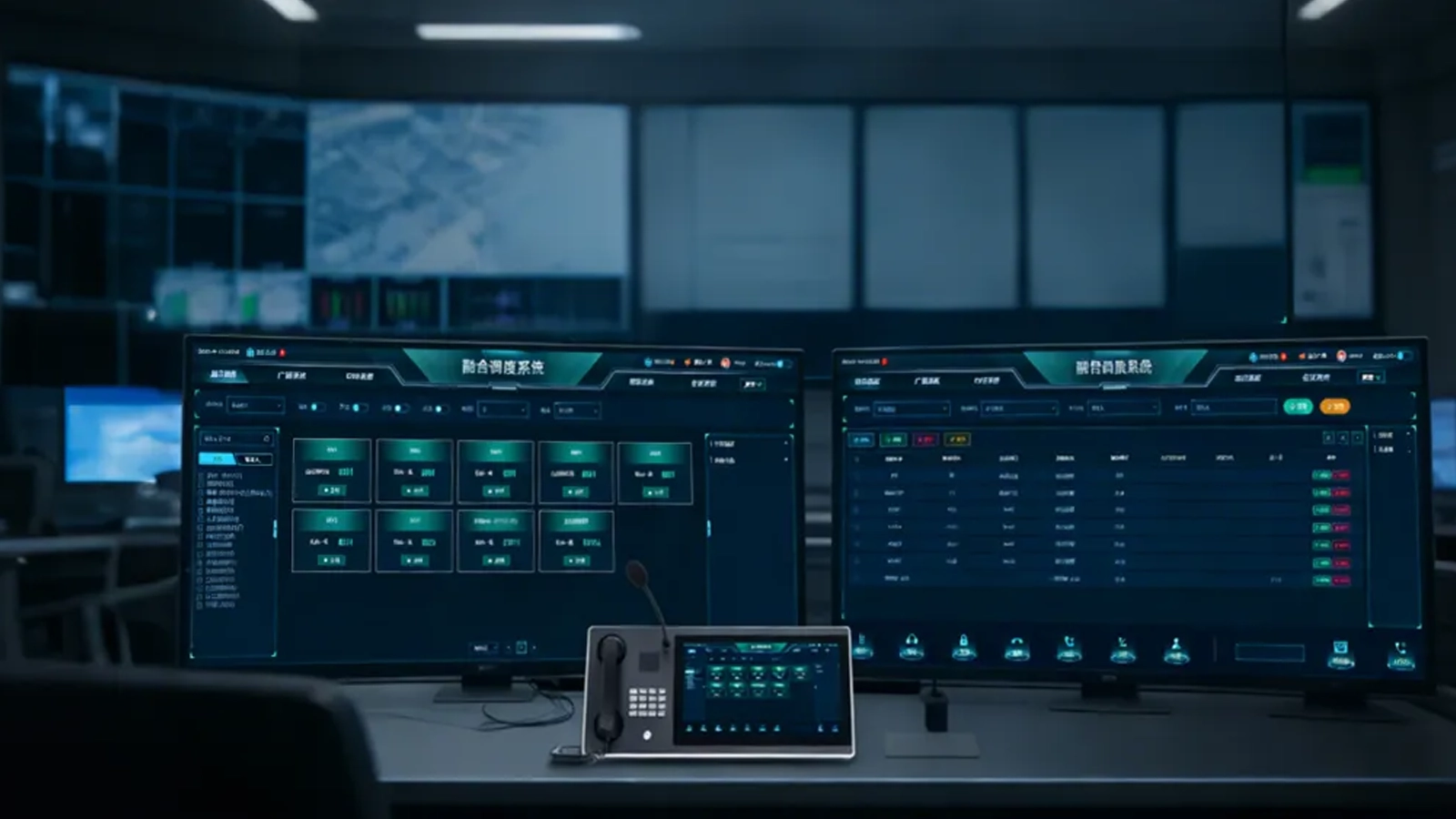
In a modern installation, an industrial telephone is usually one endpoint in a broader communication system. A SIP-based unit may register to an IP PBX, emergency communication server, intercom platform, or dispatch system. When the user presses a programmed key, the device can ring a control room, a guard post, a maintenance team, a supervisor group, or a predefined escalation path.
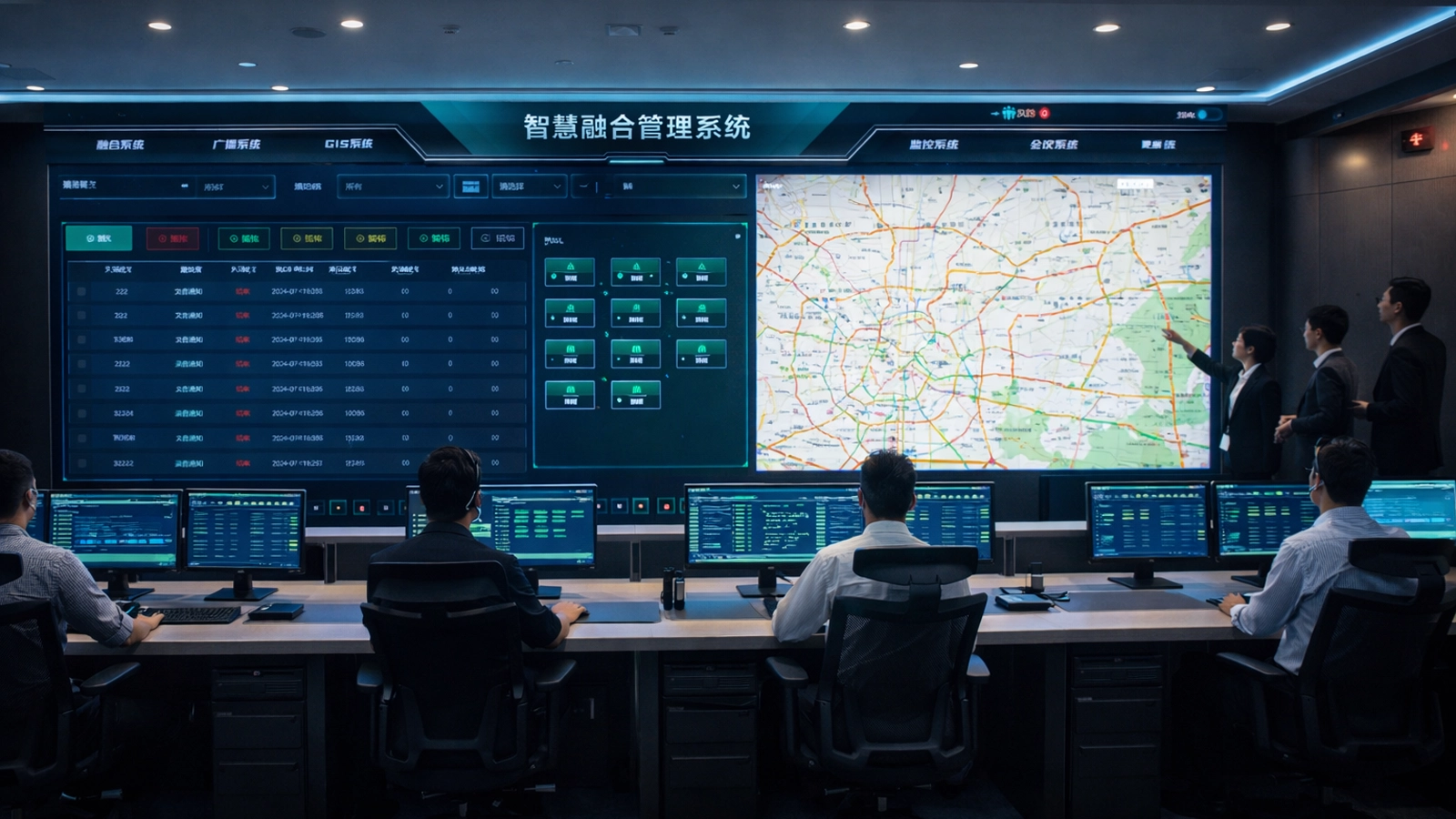
In a simpler hotline configuration, the device may call one fixed destination automatically. This is common at help points, roadside cabinets, platform edges, gate stations, or plant emergency points where speed matters more than manual dialing. In a more advanced setup, the telephone can be integrated with a paging server, CCTV workflow, alarm management platform, access control system, or industrial control environment so that voice communication becomes part of an event-driven response process.
The real value of an industrial telephone is not only the handset itself, but the fact that it can remain available and intelligible when the site needs communication most.

The most visible characteristic of an industrial telephone is its physical construction. Housings are often made from reinforced engineering plastics, cast aluminum, stainless steel, or other durable materials chosen for impact resistance and long service life. The purpose is to protect the device from dust, moisture, vibration, accidental collision, and rough everyday use.
Some units are designed for outdoor weather exposure, while others are intended for aggressive indoor industrial spaces such as washdown zones, utility rooms, workshops, process halls, or transportation corridors. The enclosure, seals, mounting structure, and cable management all contribute to whether the telephone continues to function over time in a demanding environment.
On many industrial sites, the hardest part of voice communication is not connecting the call but understanding the person on the other end. For this reason, industrial telephones often place strong emphasis on audio performance. They may include high-output ringers, amplified speakers, noise-reducing microphones, acoustic hoods, or full-duplex hands-free capability depending on the application.
This matters in places such as terminals, workshops, mines, loading areas, tunnels, rail depots, and factory lines where mechanical noise can mask speech. A rugged phone that survives the weather but delivers poor audio still fails the mission. That is why reliable communication quality is a core design goal, not an afterthought.
Industrial telephones are frequently selected by enclosure rating and environmental resistance. In real purchasing decisions, buyers often look for IP-rated protection, weather resistance, corrosion protection, and the ability to tolerate washdown or outdoor exposure. On some projects, enclosure classifications such as IP65, IP66, or comparable NEMA-rated protection become important because the environment includes rain, hose-directed water, windblown dust, or corrosive conditions.
Where chemicals, salt air, humidity, or repeated cleaning are present, material choice is especially important. A product that performs well in a warehouse may not last in a marine terminal or chemical plant. This is why industrial telephone selection is usually tied closely to the site environment rather than just to calling features.
Many industrial telephones are used for more than person-to-person dialing. Depending on the design, they may offer hotline calling, speed dial, auto-answer, relay control, strobe activation, broadcast integration, or connection to alarm workflows. Some devices are intended specifically for emergency use, allowing users to initiate contact quickly with minimal interaction.
In a dispatch-oriented environment, the phone can become a field terminal for routine coordination and emergency escalation alike. A worker can report a fault, request support, confirm a safety condition, or raise an urgent incident from a fixed location that is known to the site team. This location certainty is one reason fixed industrial telephones remain relevant even in a mobile-first world.
Factories, refineries, power plants, water treatment sites, mining operations, and process industries often deploy industrial telephones to support maintenance coordination, operations communication, and emergency reporting. Fixed voice points are valuable because they remain in place, are always powered through the planned infrastructure, and do not depend on workers carrying a separate personal device.
In these settings, telephones may be mounted near hazardous process areas, production lines, workshops, boiler rooms, pump stations, substations, or field equipment zones. They can also be combined with public address, alarms, or dispatch software to support broader site communication.
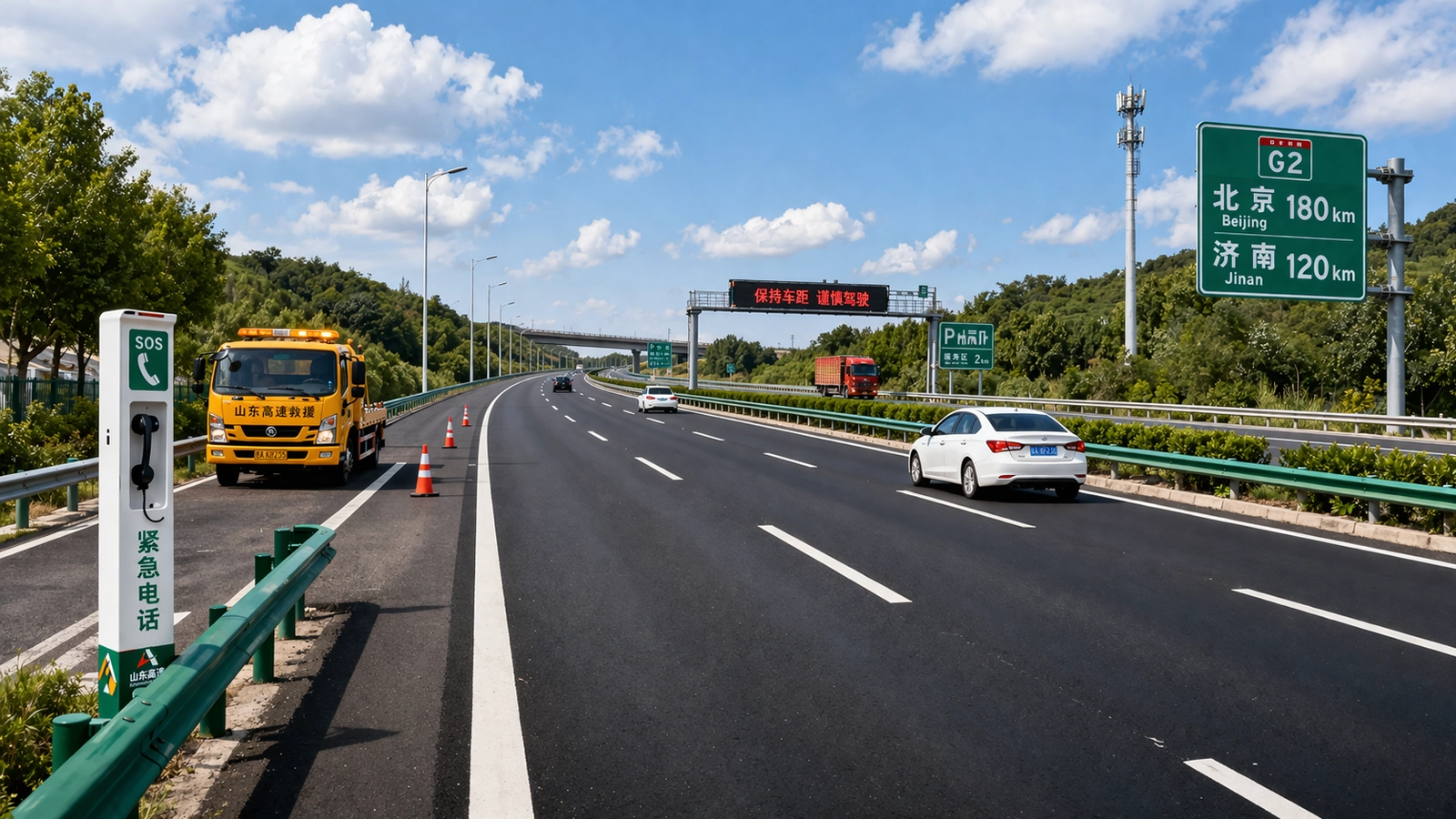
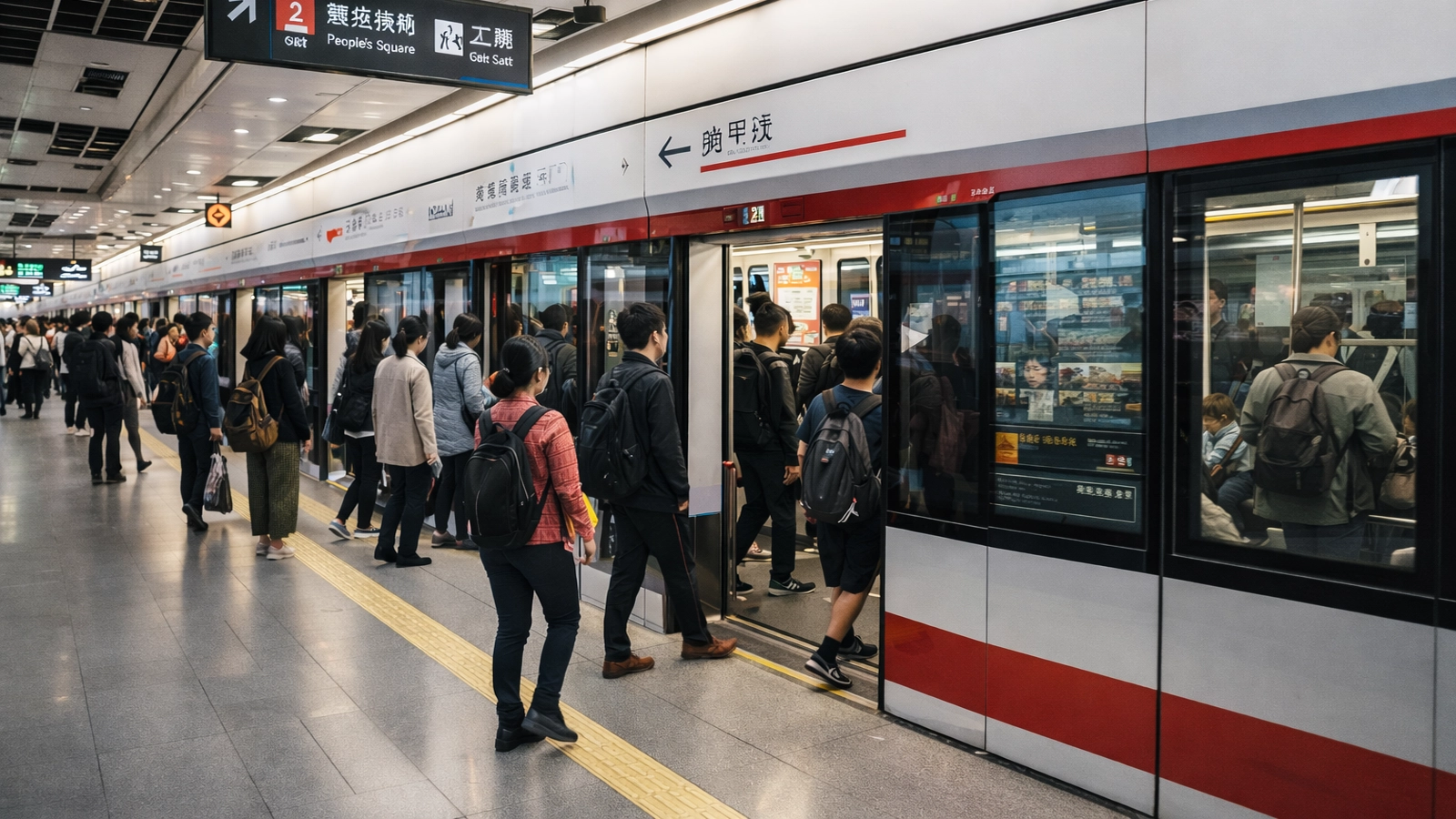
Rail networks, metro stations, tunnels, highways, bridges, ports, and airports all use fixed industrial communication endpoints in one form or another. The operational goal is usually the same: give staff and the public a simple, reliable method for contacting assistance from a specific location. In transportation environments, fast identification of location can be as important as the voice call itself.
This is why industrial telephones are common in platform help points, tunnel emergency niches, roadside cabinets, parking facilities, service yards, and marine installations. The equipment must remain visible, easy to use, and durable enough to handle weather, continuous public exposure, and maintenance cycles.

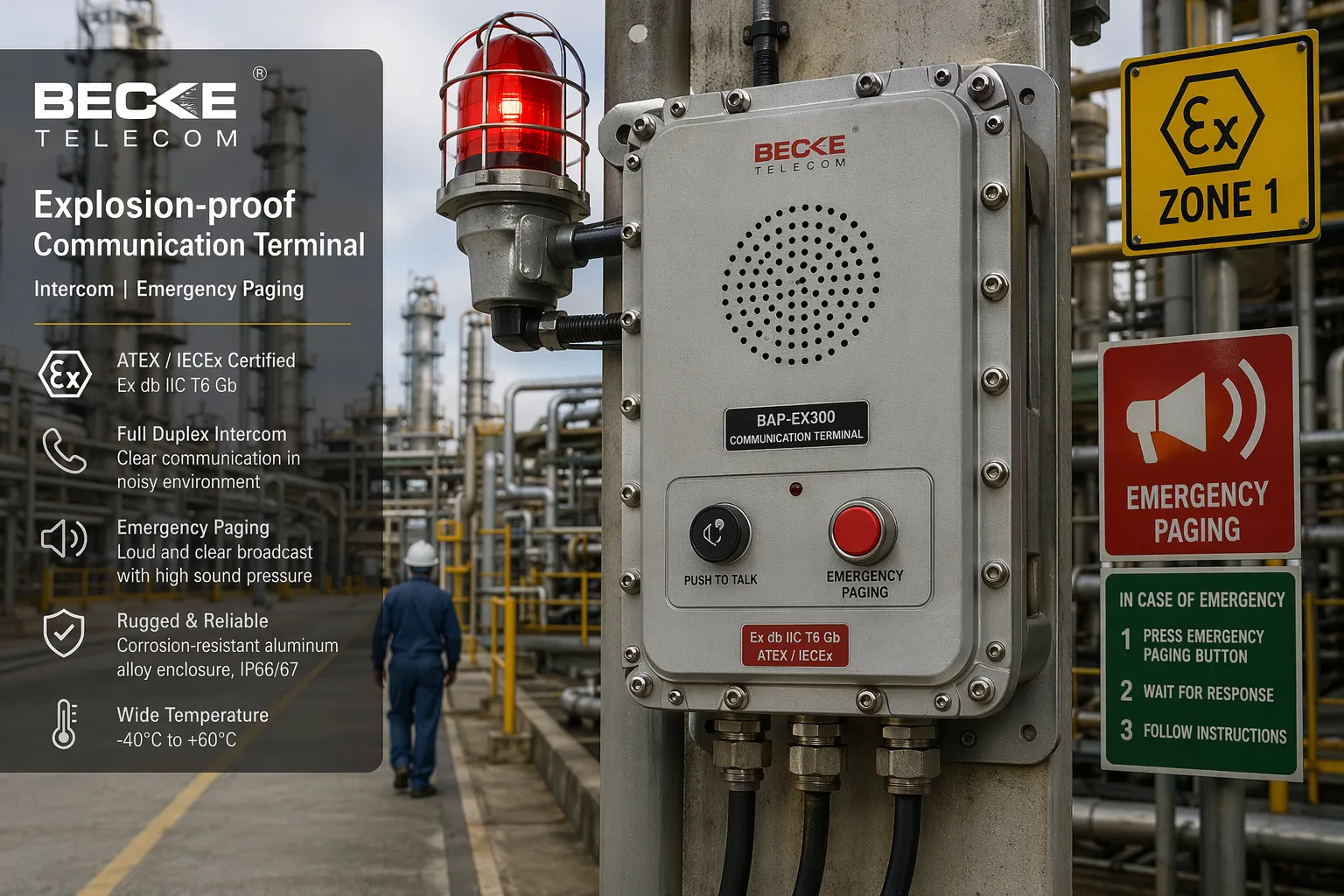
In some sectors, communication equipment must be suitable for locations where flammable gas, vapor, or combustible dust may be present. In those cases, users may require industrial telephones built and certified for hazardous areas rather than standard rugged models. The telephone still performs the same communication function, but the design, protection concept, and certification requirements become much stricter.
Examples include petrochemical plants, offshore platforms, gas processing facilities, grain handling sites, and certain mining or chemical environments. For these projects, the selection process does not stop at ruggedness. It also requires checking that the product is approved for the relevant hazardous-area classification and intended installation zone.
The harsher and more regulated the site becomes, the more important it is to match the telephone not just to the network, but also to the environment, compliance requirements, and operational workflow.
| Aspect | Industrial Telephone | Standard Office Phone |
|---|---|---|
| Environment | Harsh indoor or outdoor sites | Clean indoor office areas |
| Housing | Rugged, sealed, impact-resistant | Light-duty plastic enclosure |
| Audio | Loud, noise-aware, field-oriented | Normal office acoustic design |
| Controls | Often glove-friendly or hotline-based | Standard keypad and soft keys |
| Protection | Built for dust, water, corrosion, vibration | Limited environmental protection |
| Use Case | Safety, operations, dispatch, emergency support | Routine business communication |
The best selection process starts with the environment rather than the feature list. Buyers should first ask whether the device will be used indoors or outdoors, whether the location is wet, dusty, corrosive, noisy, washdown-prone, public-facing, or hazardous, and whether users will need a handset, hands-free operation, or a simple emergency hotline function.
After that, it becomes easier to choose the communication type. Some projects still use analog infrastructure. Others prefer SIP/VoIP because it integrates more easily with IP PBX systems, dispatch platforms, recording, and centralized management. The correct answer depends on the site architecture and long-term operations plan.
Industrial telephones are often part of a larger system, so compatibility matters. A site may need the phone to work with a PBX, an intercom platform, a paging system, a dispatch console, CCTV-triggered workflows, or alarm inputs and outputs. Ease of maintenance also matters because a device mounted in a tunnel or process area is harder to service than a phone in an office.
For that reason, buyers usually evaluate not only the hardware, but also mounting method, cable entry, spare parts, configuration options, supervision features, and long-term support. In critical sites, reliability is not measured by how the phone performs on day one, but by whether it keeps working after years of exposure.
An industrial telephone is a rugged communication endpoint built for environments where ordinary phones are not reliable enough. It works by establishing voice communication over analog, IP, VoIP, or hybrid networks, but it differs from standard telephones in the way it is engineered for environmental resistance, audibility, reliability, and operational readiness.
Whether it is used for plant operations, tunnel emergency help, transport assistance, utilities coordination, or hazardous-area communication, the industrial telephone remains an important part of critical voice infrastructure. The right model is the one that matches the site’s environment, network architecture, user behavior, and safety requirements.
The main purpose of an industrial telephone is to provide dependable voice communication in harsh, noisy, outdoor, or mission-critical environments where ordinary telephones may fail or become difficult to use.
An industrial telephone is usually more rugged, better sealed, easier to hear in noisy spaces, and better suited for fixed-site safety or operational use. A normal phone is generally designed for clean, indoor office conditions.
Yes. Many industrial telephones are available in SIP or VoIP versions for connection to IP PBX systems, dispatch platforms, or unified communication networks. Analog versions are also still common.
No. They are often used for routine operations, maintenance coordination, gate or perimeter communication, dispatch contact, and help-point calling in addition to emergency scenarios.
Yes. Many industrial telephones are specifically designed for outdoor installation and are selected based on weather resistance, enclosure protection, corrosion resistance, and mounting conditions.
No. A rugged industrial telephone is not automatically suitable for hazardous locations. If the site has explosive gas or dust risks, the product must be specifically designed and certified for the required hazardous-area classification.
底部简介