行业洞察
2026-09-08 10:24:21

BAR如何支持N4接口的下行缓存与通知

N4缓存将FAR BUFF/NOCP与特定流程的BAR参数结合。PFCP报告、扩展缓存和UE可达性共同决定CM-IDLE处理期间的通知、用户面恢复和丢包情况。

贝克电信

BAR如何支持N4接口的下行缓存与通知

当UE在3GPP接入下进入CM-IDLE时,已经建立的PDU Session可以继续存在,而其用户面连接被去激活。即使无法使用即时交付所需的接入侧N3隧道,下行包仍可能从数据网络经N6到达UPF。在控制面尝试恢复交付期间,缓存可以暂时保留部分流量。

在N4接口上,SMF通过PFCP控制UPF。缓存动作规则(BAR)为关联的转发动作规则(FAR)提供缓存指令。必须区分两者:FAR通过Apply Action选择缓存;BAR不会独立匹配数据包或发起寻呼。CM-IDLE也不保证每个包都被缓存,或每次通知都会引发寻呼。

PDR、FAR和BAR承担不同职责

包检测规则(PDR)识别适用流量并引用FAR。FORW请求按适用的Forwarding Parameters转发,BUFF请求缓存。NOCP请求将首个被缓存的下行包通知控制面;它是通知动作,不是内存分配参数。

对于通常的5GC BUFF/NOCP情况,报告范围是某个FAR下每条QoS流的首个下行包。同一QoS流的后续包不需要逐包再次报告。属于另一条QoS流或关联到另一条FAR的包,可能产生额外报告。扩展缓存可以改变这种通知行为。

FAR可以通过BAR ID引用BAR。一条BAR可以服务于多条关联FAR,包括为PFCP Session共用一个缓存。在TS 29.244 V18.7.0中,每个PFCP Session最多可以创建一条BAR。仅看到创建BAR并不能证明下行流量使用了它:需要检查PDR到FAR的关系以及FAR的BAR ID。

有关基础分类与转发阶段,可参阅相关指南:N4接口上的PDR包检测以及FAR转发与隧道参数。
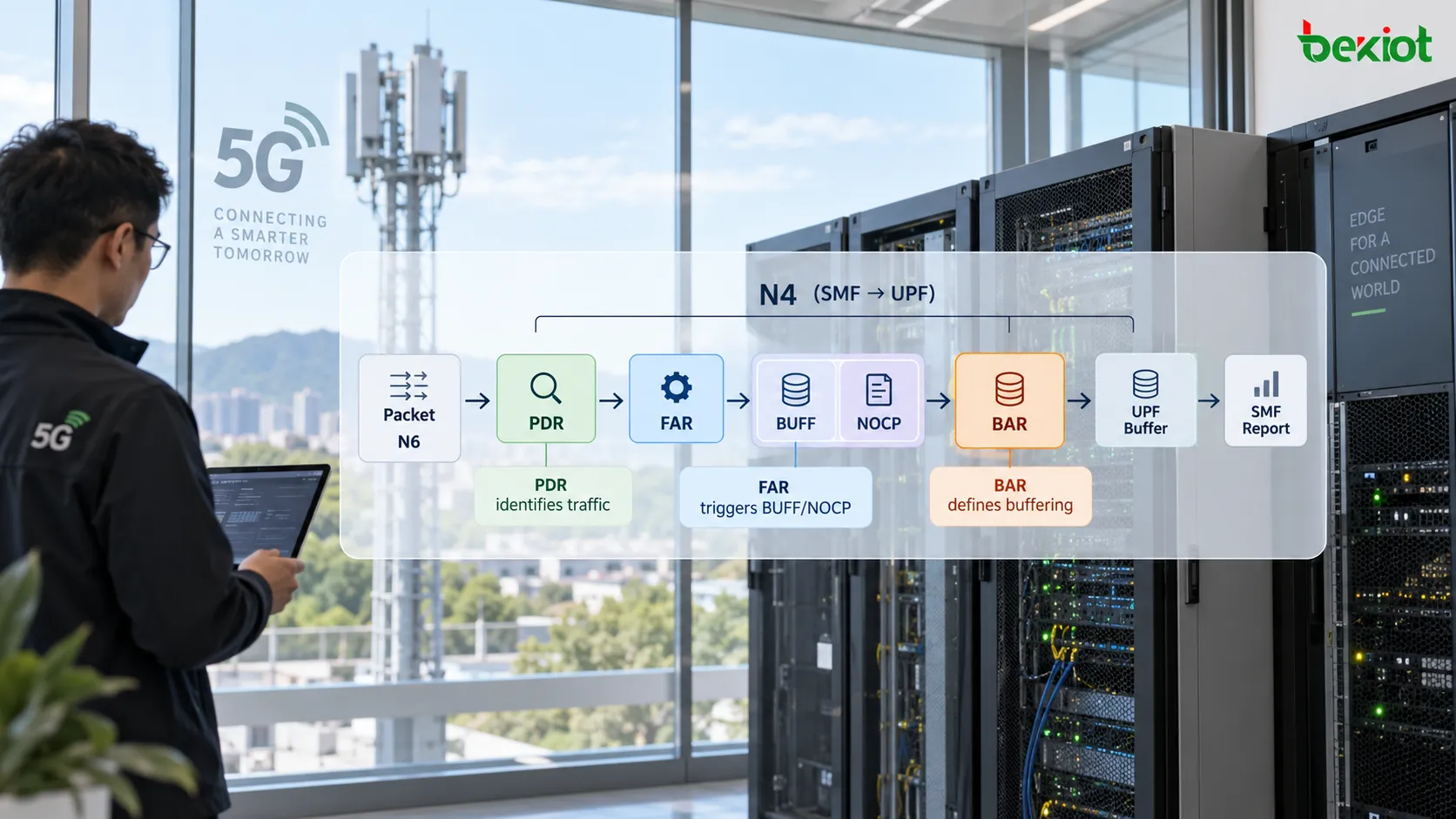
PDR分类、FAR BUFF/NOCP动作、BAR缓存指令以及UPF向SMF报告的示意图
N4接口规则链:PDR识别下行链路流量,FAR使用BUFF和NOCP触发缓冲与控制平面通知,BAR定义UPF如何缓冲数据包

CM-IDLE期间下行数据到达后会发生什么?

以已注册且建立PDU Session的UE为例。用户面连接处于激活状态时,UPF将下行包转发至gNB。连接去激活后,SMF更新相应的N4规则和接入隧道信息。采用UPF缓存时,相关FAR可以请求BUFF和NOCP,而非立即转发。这是会话控制决策,不是BAR对无线状态变化作出的自主反应。

  1. 下行数据到达UPF。匹配的PDR及其关联FAR决定如何处理数据。

  2. 如果收到缓存并通知的指令,UPF缓存数据,并发送包含Downlink Data Report的PFCP Session Report Request。报告标识相关PDR;SMF可通过PDR上下文或Downlink Data Service Information确定QoS流。

  3. SMF使用PFCP Session Report Response确认报告,并在适用时通过Namf_Communication_N1N2MessageTransfer联系AMF。AMF可以发起寻呼及Service Request流程,以恢复用户面连接。

  4. 接入侧隧道建立后,SMF向UPF更新转发动作和正确的隧道参数。随后,缓存包便可按照新指令转发。

TS 23.502将第2阶段的交互称为Data Notification和Data Notification Ack。在N4抓包中,应使用实际的PFCP消息名称和Downlink Data Report名称。将整段交互简称为“DDN”便于交流,但并不意味着它就是S11上的EPC Downlink Data Notification消息。

该顺序描述了常见的UPF缓存情况。TS 23.502也允许按指令将数据转发到SMF进行缓存。UE可能处于CM-CONNECTED,但某个PDU Session没有激活的用户面连接;RRC_INACTIVE也不同于CM-IDLE。接入类型、MICO、扩展空闲态DRX、寻呼限制以及已知的不可达状态,都可能改变或阻止寻呼。套用空闲态解释之前,应检查实际会话与接入状态。

必须结合流程上下文理解BAR字段

以下区别依据TS 29.244 V18.7.0第5.2.4、7.5.2.6、7.5.4.11和7.5.9.2节。BAR不是一个在每次N4交互中都必须携带所有可能缓存设置的通用容器。

字段含义与条件
BAR ID标识PFCP Session内的BAR。FAR引用选择与该BAR关联的缓存指令。
Suggested Buffering Packets Count依赖UDBC支持的字段,建议在等待控制面新指令期间缓存多少UL/DL包。它不代表UPF的物理内存容量。提供该字段时,所引用的Create/Update BAR表要求丢弃超过上限的包。
DL Buffering Suggested Packet Count这是另一字段,表示建议在PFCP Session扩展缓存期间保留的最大下行包数量。不得与Suggested Buffering Packets Count混淆。
DL Buffering Duration控制扩展下行缓存。在PFCP Session Report Response中下发依赖DLBD支持;通过PFCP Session Modification下发依赖DBDM支持及适用条件。它不一定出现在初始建立过程中。
Downlink Data Notification Delay在适用情况下,延迟包到达后的通知。第5.2.4节将其下发描述为适用于EPC;不能仅因它出现在通用BAR图或解码后的分组IE中,就将其视为5GC通用的寻呼延迟控制参数。

DL Buffering Duration不仅影响保留时间,也影响报告。在指定的扩展缓存期间,通常会抑制后续下行数据到达通知。当支持Extended DL Buffering Notification Control(EDBNC)且EDBN设为1时,UPF则会在该期间报告某个FAR下每条QoS流的首个缓存包。因此,仅有NOCP不能证明此时应再次报告。

扩展缓存结束后,UPF停止应用DL Buffering Duration和DL Buffering Suggested Packet Count,并从BAR中删除这些参数。新的控制面指令决定已缓存包是被转发还是被丢弃。缓存是临时流量处理机制,不是保证无损的数据存储。
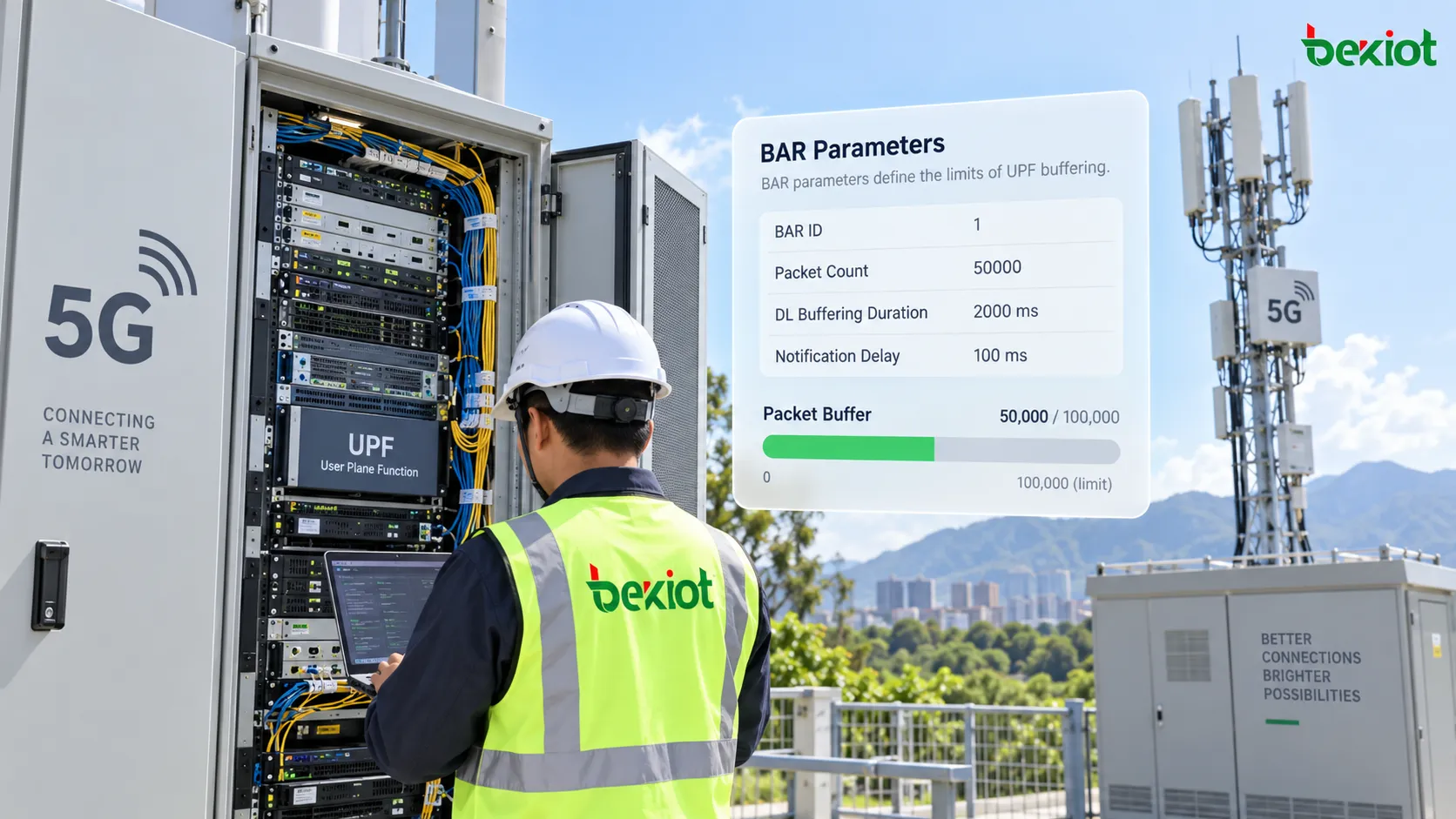
UPF机柜旁的BAR示意面板,显示包数量、缓存时长和通知延迟
BAR参数包含BAR ID、建议缓冲数据包数、DL缓冲持续时间及通知延迟,控制UPF下行链路缓冲的边界

为什么信令中可能看不到全部缓存参数

应从完整的PFCP Session历史记录开始检查。BAR可能在会话建立或较早的修改中已创建,而当前分析的交互只更新FAR。可选字段以及依赖能力支持的字段,也不需要出现在每条消息中。缺少可选字段,与引用无法解析或缺少条件必选字段,是不同的问题。

TS 29.244允许在BUFF下选择性下发缓存参数。但是,要在PFCP Session Report Response中修改BAR,必须事先下发BAR并将其关联到FAR,即使BAR为空也如此。UPF本地资源限制不能替代BAR ID关联,也不能替代适用流程要求的字段。

第5.2.4.3节规定了更有限的实现选项:当UPF支持为某个APN/DNN和/或S-NSSAI配置的扩展缓存,且满足其他规定条件时,控制面可以自行维护扩展缓存定时器,而不将其下发到UPF,同时保持NOCP开启,以接收额外QoS流的通知。这并非允许用本地配置替代所有BAR参数的普遍豁免。

排障时,应获取协商后的UP Function Features、此前下发的BAR、当前规则关联以及相关本地资源设置。这样可以区分正常省略的可选参数、不支持的功能使用、不完整抓包以及真正的规则下发失败。

按动作、缓存、通知和恢复四个阶段排障

空闲后一条消息明显延迟、寻呼成功却丢失初始包,或UPF缓存持续增长,可能分别对应不同原因。应沿四个阶段追踪数据包及其控制面状态。

1. 确认动作和匹配规则

验证下行包是否确实到达预期UPF,并匹配正确PDR。沿其FAR ID检查Apply Action,并确认PFCP Session Modification被接受的结果。如果FAR仍使用过时的接入隧道信息转发,应先检查规则及隧道更新,再调整缓存参数。

2. 确定实际生效的缓存指令

解析BAR ID引用,并在正确消息上下文中检查最新的Create BAR或Update BAR。区分两个包数量字段并核实功能支持。将配置上限与实际缓存及丢弃的包进行关联分析;建议包数量既不预留物理内存,也不保证每个包都保留到重新连接。

3. 核实报告及其处理

查找PFCP Session Report Request、Downlink Data Report、PDR ID及对应响应。检查按QoS流报告的范围、通知抑制、扩展缓存以及失败原因。如果报告被接受后没有寻呼,应检查SMF与AMF的交互和UE可达性条件,而不是直接认定BAR故障。

4. 验证恢复后的交付

Service Request成功后,确认SMF恢复FORW,并使用当前接入侧地址和TEID。对比N6入包、N3出包和缓存计数器。即使UE已可达,如果FAR仍为BUFF、隧道信息错误、缓存已到期或包已被丢弃,仍可能收不到数据。
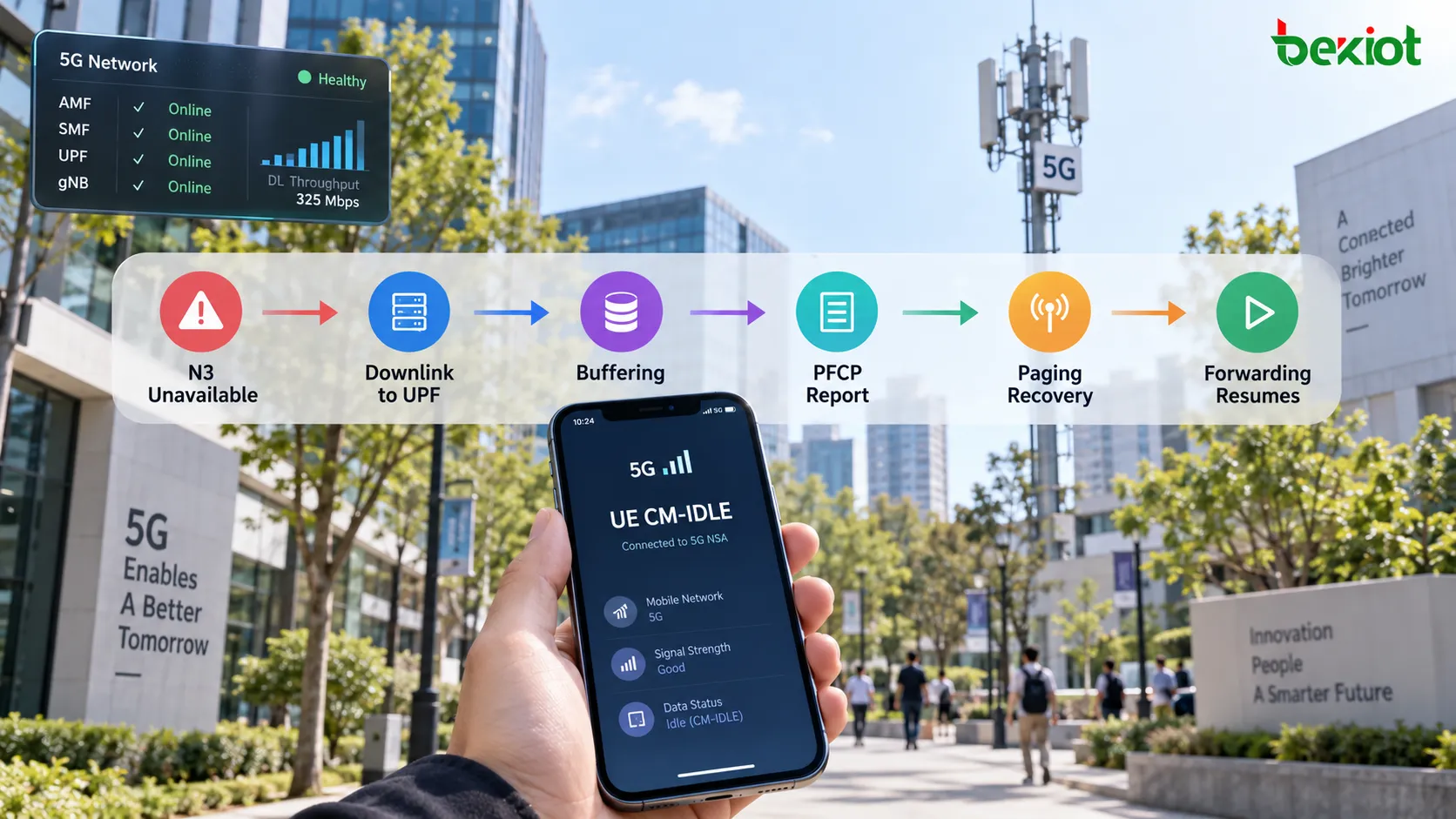
从N3不可用,经UPF缓存和PFCP报告,到寻呼恢复与重新转发的概念流程
图示展示了常见恢复路径。实际寻呼、时序和转发取决于接入状态、可达性策略以及控制面流程是否成功。

常见问题

BUFF是否需要BAR来分类数据包?

不需要。PDR分类流量,FAR请求BUFF。BAR在下发并关联后提供具体缓存指令;它不是另一个包分类器。

缺少Suggested Buffering Packets Count是否证明配置错误?

不能。该字段依赖UDBC支持,并且不同于扩展下行缓存的包数量字段。判断缺失是否异常前,应检查消息上下文、协商功能以及现有BAR状态。

每个Downlink Data Report都会引发寻呼吗?

不会。SMF和AMF需要应用可达性、接入及策略条件。报告可能引发用户面重新激活、扩展缓存或失败处理;寻呼只是流程中可能出现的一环。

为什么重新连接成功后仍可能丢包?

缓存可能在恢复前已经达到上限或到期,也可能是FAR或隧道更新不完整。仅凭重新连接成功,无法验证保留的包是否齐全,也无法确认N3转发已经恢复。

参考资料

  • 3GPP TS 29.244 V18.7.0:第5.2.3–5.2.4、7.5.2.6、7.5.4.11、7.5.8–7.5.9及8.2.28–8.2.30、8.2.100节涵盖FAR/BAR处理、报告和缓存信息元素。

  • 3GPP TS 23.502 V18.9.0:第4.2.3.3节描述Network Triggered Service Request、数据通知、可达性例外及扩展缓存。

推荐产品
目录
客服 电话
We use cookie to improve your online experience. By continuing to browse this website, you agree to our use of cookie.

Cookies

This Cookie Policy explains how we use cookies and similar technologies when you access or use our website and related services. Please read this Policy together with our Terms and Conditions and Privacy Policy so that you understand how we collect, use, and protect information.

By continuing to access or use our Services, you acknowledge that cookies and similar technologies may be used as described in this Policy, subject to applicable law and your available choices.

Updates to This Cookie Policy

We may revise this Cookie Policy from time to time to reflect changes in legal requirements, technology, or our business practices. When we make updates, the revised version will be posted on this page and will become effective from the date of publication unless otherwise required by law.

Where required, we will provide additional notice or request your consent before applying material changes that affect your rights or choices.

What Are Cookies?

Cookies are small text files placed on your device when you visit a website or interact with certain online content. They help websites recognize your browser or device, remember your preferences, support essential functionality, and improve the overall user experience.

In this Cookie Policy, the term “cookies” also includes similar technologies such as pixels, tags, web beacons, and other tracking tools that perform comparable functions.

Why We Use Cookies

We use cookies to help our website function properly, remember user preferences, enhance website performance, understand how visitors interact with our pages, and support security, analytics, and marketing activities where permitted by law.

We use cookies to keep our website functional, secure, efficient, and more relevant to your browsing experience.

Categories of Cookies We Use

Strictly Necessary Cookies

These cookies are essential for the operation of the website and cannot be disabled in our systems where they are required to provide the service you request. They are typically set in response to actions such as setting privacy preferences, signing in, or submitting forms.

Without these cookies, certain parts of the website may not function correctly.

Functional Cookies

Functional cookies enable enhanced features and personalization, such as remembering your preferences, language settings, or previously selected options. These cookies may be set by us or by third-party providers whose services are integrated into our website.

If you disable these cookies, some services or features may not work as intended.

Performance and Analytics Cookies

These cookies help us understand how visitors use our website by collecting information such as traffic sources, page visits, navigation behavior, and general interaction patterns. In many cases, this information is aggregated and does not directly identify individual users.

We use this information to improve website performance, usability, and content relevance.

Targeting and Advertising Cookies

These cookies may be placed by our advertising or marketing partners to help deliver more relevant ads and measure the effectiveness of campaigns. They may use information about your browsing activity across different websites and services to build a profile of your interests.

These cookies generally do not store directly identifying personal information, but they may identify your browser or device.

First-Party and Third-Party Cookies

Some cookies are set directly by our website and are referred to as first-party cookies. Other cookies are set by third-party services, such as analytics providers, embedded content providers, or advertising partners, and are referred to as third-party cookies.

Third-party providers may use their own cookies in accordance with their own privacy and cookie policies.

Information Collected Through Cookies

Depending on the type of cookie used, the information collected may include browser type, device type, IP address, referring website, pages viewed, time spent on pages, clickstream behavior, and general usage patterns.

This information helps us maintain the website, improve performance, enhance security, and provide a better user experience.

Your Cookie Choices

You can control or disable cookies through your browser settings and, where available, through our cookie consent or preference management tools. Depending on your location, you may also have the right to accept or reject certain categories of cookies, especially those used for analytics, personalization, or advertising purposes.

Please note that blocking or deleting certain cookies may affect the availability, functionality, or performance of some parts of the website.

Restricting cookies may limit certain features and reduce the quality of your experience on the website.

Cookies in Mobile Applications

Where our mobile applications use cookie-like technologies, they are generally limited to those required for core functionality, security, and service delivery. Disabling these essential technologies may affect the normal operation of the application.

We do not use essential mobile application cookies to store unnecessary personal information.

How to Manage Cookies

Most web browsers allow you to manage cookies through browser settings. You can usually choose to block, delete, or receive alerts before cookies are stored. Because browser controls vary, please refer to your browser provider’s support documentation for details on how to manage cookie settings.

Contact Us

If you have any questions about this Cookie Policy or our use of cookies and similar technologies, please contact us at support@becke.cc .